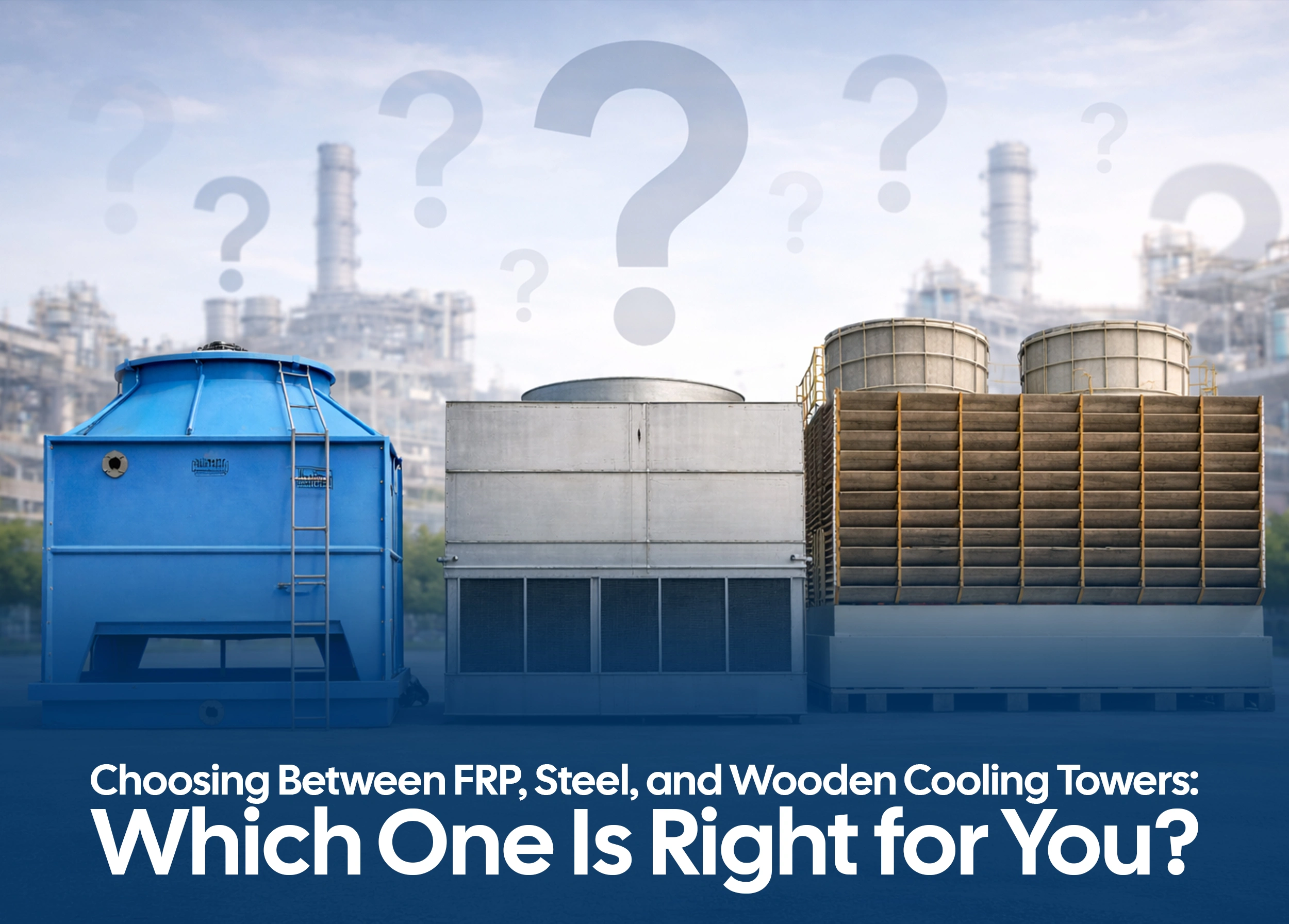
Choosing Between FRP, Steel, and Wooden Cooling Towers: Which One Is Right for You?
This article compares the three most common cooling tower material options so buyers can evaluate long-term performance, maintenance needs, and application fit without changing the original article content.
Which material is right for most applications?
FRP cooling towers are the best choice for most modern industrial and HVAC applications due to corrosion resistance, low maintenance, lightweight construction, and long lifespan. Steel cooling towers are suitable for very high-temperature applications, while wooden cooling towers are largely outdated and used only in limited cases.
How to choose the right cooling tower material
Choosing the right cooling tower material is one of the most important decisions for any industrial facility. Whether you're in Mumbai, Pune, Gujarat, Chennai, Dubai, Abu Dhabi, Riyadh, or Oman, the performance, lifespan, and maintenance cost of your cooling tower depends heavily on the material you select.
The three most widely used cooling tower materials today are:
- FRP (Fiberglass Reinforced Plastic)
- Steel (Galvanized Steel / Stainless Steel)
- Wooden Cooling Towers
Each comes with its own advantages and limitations.
In this guide, we compare FRP vs Steel vs Wooden Cooling Towers in detail so you can confidently choose the best option for your plant or HVAC system.
Understanding the 3 Types of Cooling Tower Materials
FRP Cooling Towers
FRP cooling towers use fiberglass-reinforced plastic, a lightweight and corrosion-resistant composite material. These are the most modern and widely adopted cooling towers today.
Steel Cooling Towers
Steel towers are built from galvanized (GI), stainless steel (SS304/SS316), or mild steel with epoxy coating. They are suited for certain high-temperature or specialized applications.
Wooden Cooling Towers
Wooden towers are made using seasoned timber, typically pine or chemically treated wood. They were extremely popular earlier but are now seen mostly in old installations.
Comparing FRP vs Steel vs Wooden Cooling Towers
A) Corrosion Resistance
FRP Cooling Towers
- Excellent corrosion resistance
- Best for coastal cities like Mumbai, Chennai, Dubai
- Withstands chemical fumes
Steel Cooling Towers
- Stainless steel is corrosion-resistant
- Galvanized steel corrodes faster in humidity, saline air
- Requires regular surface treatment
Wooden Cooling Towers
- High risk of rotting, fungus, termites
- Absorbs moisture, becomes heavy over time
Winner: FRP Cooling Towers
B) Weight & Structural Load
FRP Cooling Towers
- Lightweight (60-70% lighter than metal)
- Ideal for rooftop HVAC installations
- Requires minimal civil foundation
Steel Cooling Towers
- Heavier, requires reinforced structure
- Stainless steel lighter than GI but still heavier than FRP
Wooden Cooling Towers
- Heaviest structure
- Not suitable for rooftops
Winner: FRP Cooling Towers
C) Maintenance Requirements
FRP Cooling Towers
- Minimal maintenance
- No rusting, no repainting
Steel Cooling Towers
- Needs repainting, anti-corrosion treatment
- SS316 is low maintenance but very expensive
Wooden Cooling Towers
- Requires frequent chemical treatment
- High chance of leakage & structural deterioration
Winner: FRP Cooling Towers
D) Temperature Resistance
FRP Cooling Towers
- Performs well for standard industrial & HVAC loads
- Extremely high temperatures require special FRP grades
Steel Cooling Towers
- Best for very high-temperature applications
- Oil refineries and heavy-duty process plants prefer steel
Wooden Cooling Towers
- Naturally withstands some heat
- Susceptible to moisture damage
Winner: Steel Cooling Towers (for high-heat applications)
E) Cost & Long-Term ROI
FRP Cooling Towers
- Most cost-effective long-term
- Lower operating cost
- Fewer breakdowns & repairs
Steel Cooling Towers
- Higher upfront cost
- More maintenance expenses
Wooden Cooling Towers
- Low initial cost
- Very high recurring maintenance cost
- Shorter lifespan
Winner: FRP Cooling Towers
F) Lifespan
FRP Towers: 15-20 years
Steel Towers: 10-15 years (SS can last longer)
Wooden Towers: 5-8 years
Winner: FRP (longest lifespan for general use)
Where Each Tower Type Is Best Used
FRP Cooling Tower - Best For:
- HVAC systems in high-rise buildings
- Chemical plants
- Pharmaceutical units
- Plastic & injection molding
- Food processing
- Coastal or humid climates
- India + Gulf installations
Steel Cooling Tower - Best For:
- High-temperature process plants
- Oil & gas refineries
- Some power plant applications
- Environments requiring fire-resistant materials
Wooden Cooling Tower - Best For:
- Old plants still using wooden structures
- Temporary installations
- Low-budget setups
However, wooden towers are rapidly becoming outdated.
Why FRP Cooling Towers Are Becoming the Industry Standard
- UV-resistant
- Corrosion-proof
- 60% lighter construction
- Longest lifespan
- Versatile for all industries
- Lowest maintenance
- Ideal for hot & humid tropical climates
Cities like Mumbai, Raigad, Kochi, Dubai, Abu Dhabi, Doha, and Muscat benefit immensely from FRP's corrosion-resistant nature.
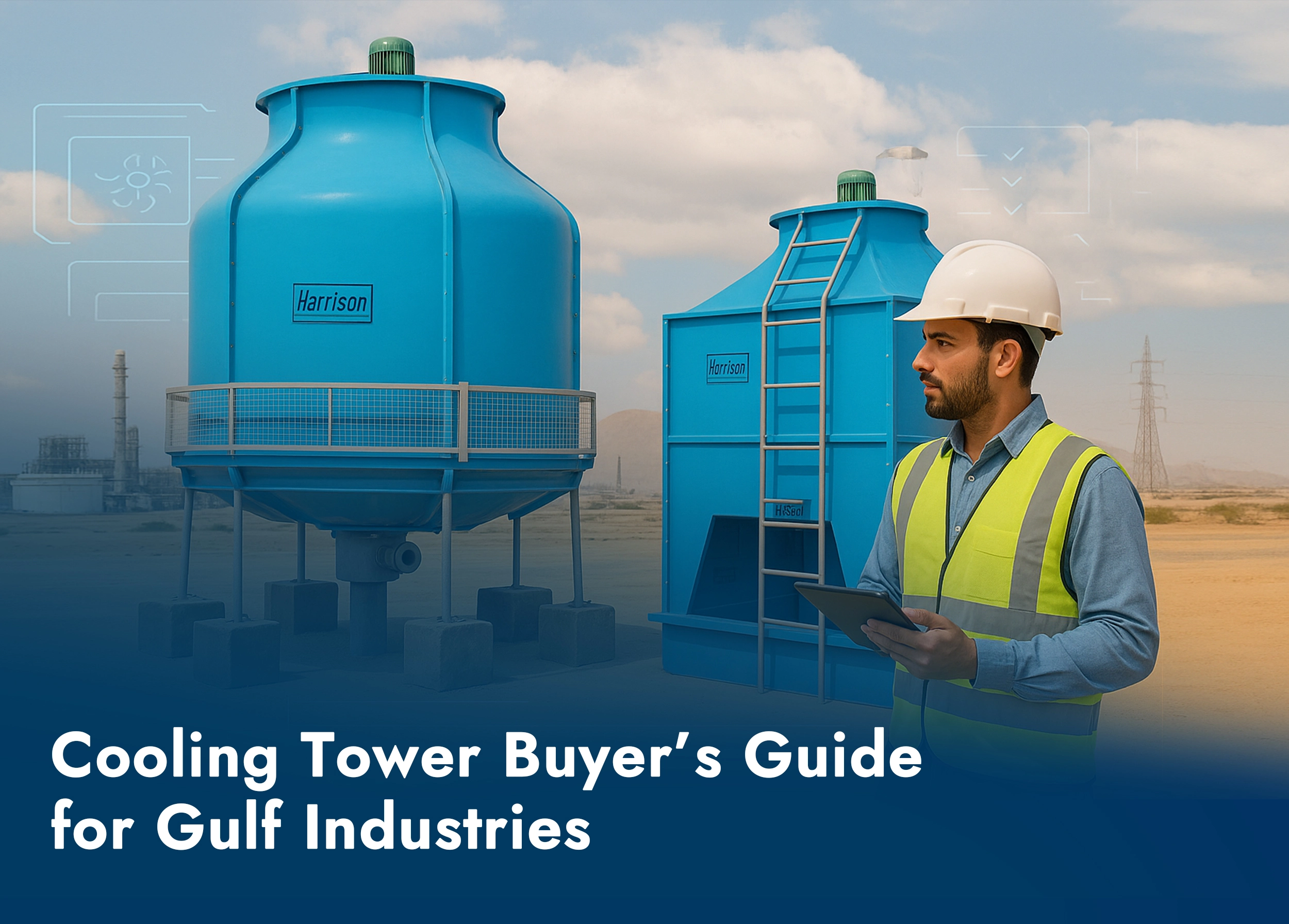
Harrison Cooling Towers - The Experts in FRP & Closed Circuit Cooling Systems
With over 35 years of experience, Harrison Cooling Towers leads the industry with:
- FRP Square Cooling Towers
- FRP Round Cooling Towers
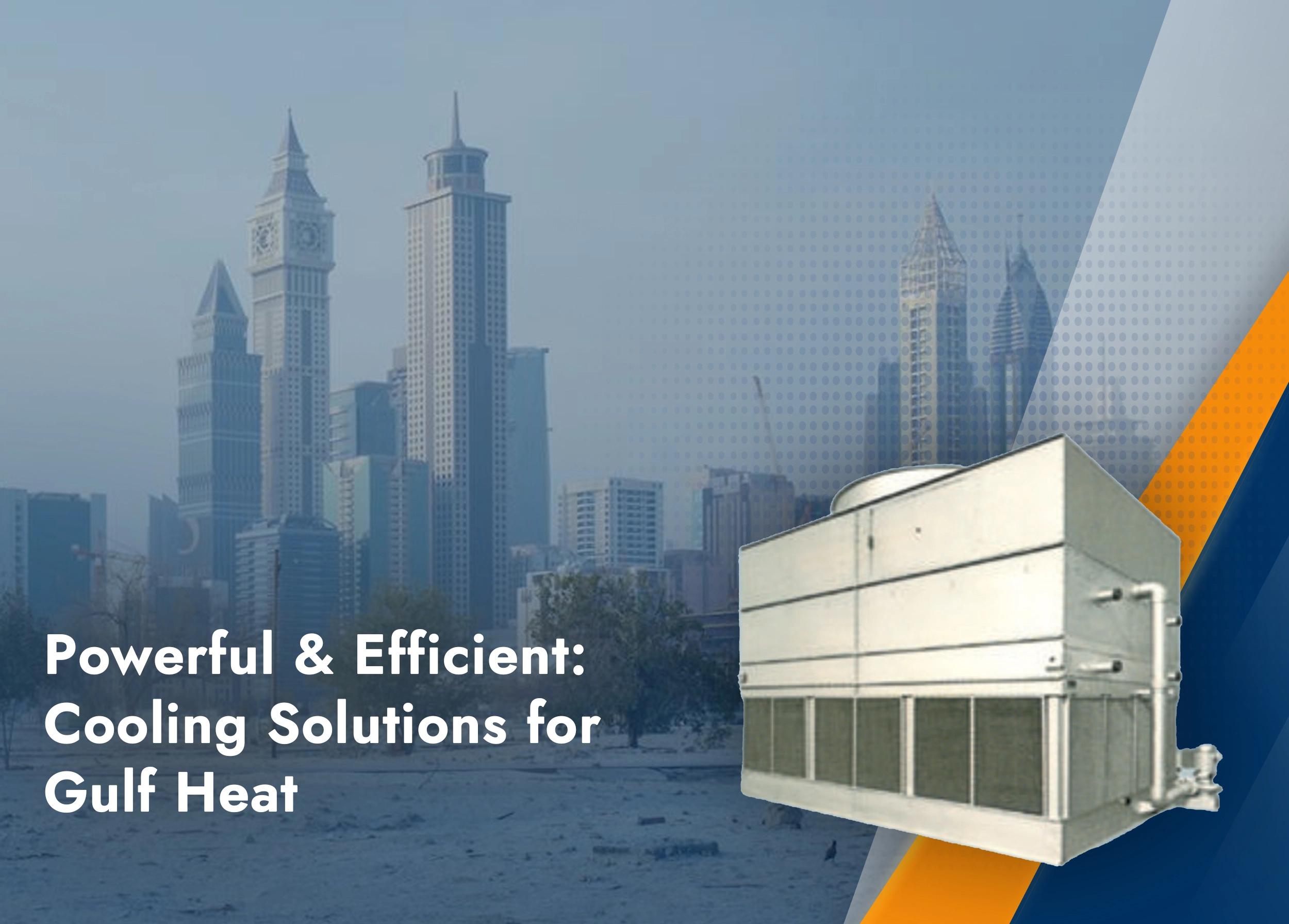
- Closed Circuit Cooling Towers
- Industrial Evaporative Coolers
- Spare Parts & AMC
Our towers are engineered for Indian heat, Gulf desert climate, coastal humidity, and dusty industrial zones.
Frequently Asked Questions (FAQs)
Which cooling tower material is best for most industries?
FRP cooling towers are best for most industries due to corrosion resistance, low maintenance, lightweight construction, and long service life.
When should steel cooling towers be selected?
Steel cooling towers are preferred for very high-temperature and heavy-duty industrial applications such as refineries and power plants.
Are wooden cooling towers still recommended?
Wooden cooling towers are mainly used in older installations and are becoming outdated due to high maintenance and shorter lifespan.
Which cooling tower material is suitable for coastal and humid climates?
FRP cooling towers are ideal for coastal and humid environments like Mumbai and Gulf regions because they resist corrosion and moisture damage.
Which cooling tower offers the best long-term ROI?
FRP cooling towers offer the best long-term ROI due to lower operating costs, minimal maintenance, and longer lifespan.
Choosing between FRP, steel, and wooden cooling towers depends on your climate, application, budget, and operational priorities.
Choosing between FRP, steel, and wooden cooling towers depends on your climate, application, budget, and operational priorities. However, in most modern industrial and commercial use cases, FRP Cooling Towers deliver the best overall performance, durability, and ROI.
If you need guidance selecting the right cooling tower for your plant, Harrison Cooling Towers provides free consultation to help you choose the most reliable, efficient, and cost-effective solution.